
What happens to your brand when every customer has a personal AI agent?
BrandRank.AI measures how AI describes and recommends your brand. Second Self asks the larger question behind that data, and names what brands and consumers must do about it.
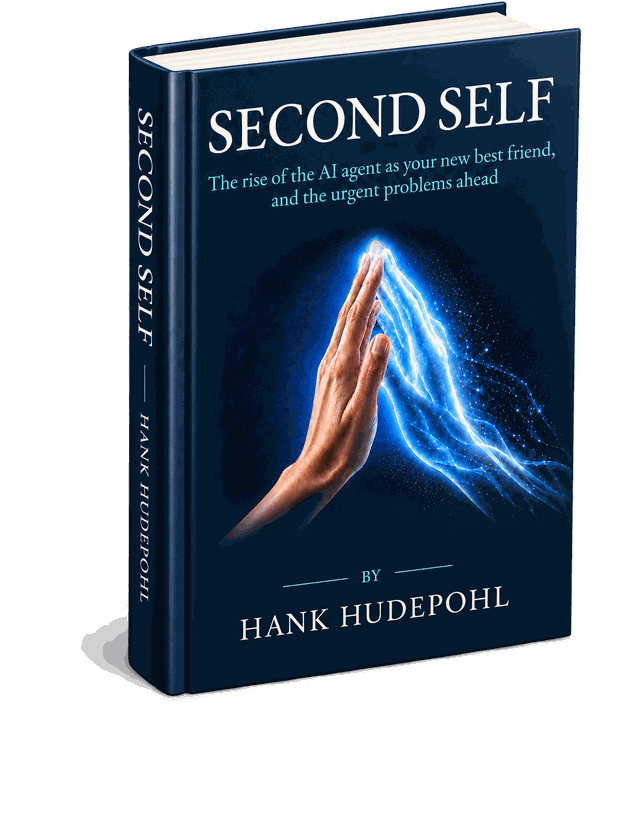
The rise of the AI agent as your new best friend, and the urgent problems ahead
In ancient Greece, Aristotle defined a friend as another self. Hank Hudepohl argues the personal AI agent is becoming exactly that: a trusted counselor that advises, recommends, negotiates, and acts on our behalf. Second Self names the urgent problems this creates for brands and consumers, and what both must do about them.
By Hank Hudepohl, Co-Founder and COO, BrandRank.AI
Paperback · 177 pages · $25.00
The AI that once returned a list now remembers, advises, and acts, and it is trusted the way a friend is trusted. People bring it the hard things first: the diagnosis, the family conflict, the decision they cannot say out loud. Commerce follows almost as an afterthought, and every recommendation rides on that borrowed intimacy.
The brands that win the Confidant Era will not be the ones the agent mentions most. They will be the ones it never has to apologize for.Hank HudepohlSecond Self
AI agents that remember your life, run around the clock, and buy, book, and negotiate on your behalf are no longer a forecast. Second Self was published on August 1, 2026, ahead of the first wave of mainstream personal-agent launches. Four shifts it names are now the operating reality for every brand.
The agent earns trust on the hard things first. Once a person has trusted it with a marriage, trusting it with a mattress is nothing.
A voice you did not hire describes you in a private conversation you cannot hear. There is no pixel to fire in a friendship.
When answers become purchases, verification has to happen before the action. After the fact, it is only forensics.
Free agents are subsidized by someone. A friend paid by you serves you. A friend paid by the sellers it evaluates is a salesman with your diary.
Aristotle described friendships of utility, of pleasure, and of virtue. They map, rung for rung, onto the machines we have asked for advice.
Trustworthy in a limited way, because it asked nothing, remembered nothing, and wanted nothing.
It seemed to understand, then forgot you the moment you closed the window. Delight without memory is an acquaintance.
Memory makes it a counselor, not a copy: a second opinion that knows the first, trusted to act as you would act.
Human friendship climbs in years. The agent climbs in months. Every problem in the book is one gap: how much the second self will be trusted, and how much it deserves to be today.
The era does not ask brands to be louder. It asks them to be checkable. The book's playbook comes down to four disciplines, each checkable by the one above it.
Publish a Brand Graph: a machine-readable record of what you are, sell, and claim, with the evidence, provenance, and terms behind every fact.
You cannot eavesdrop on the friendship, but you can interview the friend. Score Visibility, Vulnerability, and Content Readiness across every AI system.
A model cannot grade its own homework. Verify what agents say about you against your record before the answer ships and before the agent acts.
Publish a Human Help Guarantee, backed by Proof of Person, so the agent knows your company can produce a human when it matters.
The terms Second Self introduces for a relationship that is arriving faster than the vocabulary for it.

Request time with BrandRank co-founders Hank Hudepohl or Pete Blackshaw to brief your executive team or board on what changes when the AI answering your customers is trusted like a friend.
A focused session for your top executives or board, built around your brand's own AI answer-share data, not generic AI trends.
Where the AI confidant already hedges, corrects, or apologizes for your brand, with evidence specific to your category.
A shared vocabulary and a clear-eyed framework your leadership can act on immediately.
Find out what the AI confidant already believes about your brand, and what it would take to earn its approval. Tell us about your organization and timing, and we'll follow up to scope a session for your executive team or board.
Second Self is available now in paperback on Amazon. Start here if the question on your mind is what the AI confidant already believes about your brand, and what your customers will do about it.
Get it on Amazon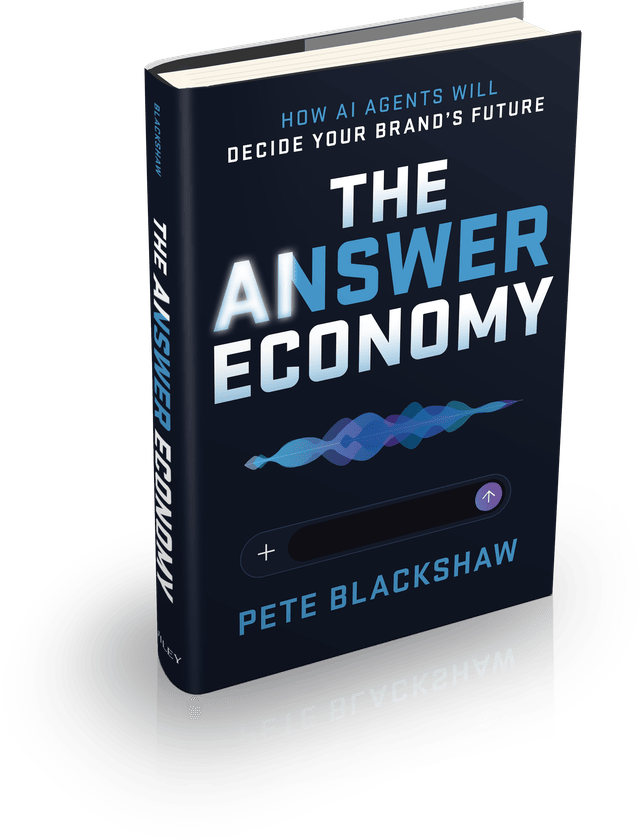
How AI Agents Will Decide Your Brand's Future
Second Self explains why people trust the agent. The Answer Economy shows what that trust does to the market, and how leaders get their brands chosen.
The questions readers ask before they pick up Second Self.
Second Self: The rise of the AI agent as your new best friend, and the urgent problems ahead is a book by Hank Hudepohl, Co-Founder and COO of BrandRank.AI. It argues that the personal AI agent is becoming more than a tool: it is moving from search companion to trusted counselor that advises, recommends, negotiates, and acts on our behalf. Part philosophy and part field guide, it names ten urgent, unsolved problems this creates for brands and consumers, and lays out what both must do about them.
The phrase comes from Aristotle, who defined a true friend as “another self”: someone who knows your character, wants your good for your own sake, and can be trusted to act as you would act. Cicero rendered it as “a second self.” The book uses it for the AI agent now crossing into the territory once reserved for the true friend, and asks what that friend must be built on before it deserves the trust people are already giving it.
The Confidant Era is the book's name for the period now arriving, in which people trust AI agents with the hard things first (a health scare, a family conflict, a decision they cannot say out loud) and commerce follows almost as an afterthought. Because the agent's product recommendations ride on that borrowed intimacy, a wrong answer about a brand does not feel like a bad search result. It feels like betrayal by a friend.
In the Confidant Era, your brand does not speak. It is spoken for. A voice you did not hire, cannot brief, and will never meet describes your brand, compares it, and defends it or declines to, inside a private conversation you cannot see. There is no shelf to walk and no ranked page to audit, so brands learn what the agent believes about them by interviewing it at scale.
The Apology Test is the standard the book uses to score the whole era: the winning agents, and the winning brands, are the ones that never need to apologize for what was said in their name. Because agents now act as well as answer, a brand passes by catching errors before they ship: correcting stale facts at the source, verifying claims before the agent acts, and routing hard cases to a person while they are still a conversation.
A Brand Graph is BrandRank.AI's framework for a machine-readable record of verified brand truth: who the brand is, what it sells, what it claims, the evidence behind each claim, its policies, its recalls, and what changed and when. Every fact carries its provenance (who asserted it, and on what evidence) and its rights (what a machine may do with it), so agents can navigate by the brand's own record instead of guessing from pages built for people.
The book closes with four disciplines. Write the truth down, in a Brand Graph. Interview the second self, by asking the questions real customers ask across every AI system and scoring Visibility, Vulnerability, and Content Readiness. Assay the answers, with verification that checks what agents say against the record before they act. And keep a provable person behind the counter, through a published Human Help Guarantee backed by Proof of Person. The appendix adds two checklists: one for brand leaders, one for consumers.
Second Self is the companion to The Answer Economy by Pete Blackshaw, Hank's co-founder at BrandRank.AI. The Answer Economy focuses on the answer: what it decides and how a brand earns it. Second Self focuses on the answerer: why people trust the agent, what it owes them, and what must be built underneath it. Both books measure brands by Visibility, Vulnerability, and Readiness, and reach the same conclusion: the brand that wins is the one that can be verified.
No. Second Self (Pine Row Press, 2026) by Hank Hudepohl is a different book. Sherry Turkle's The Second Self: Computers and the Human Spirit was published by MIT Press in 1984. Hank Hudepohl's book is about today's personal AI agents as confidants, and what brands and consumers must do about them. Its ISBN is 978-1-963110-27-2.
Hank Hudepohl is Co-Founder and COO of BrandRank.AI, a platform that helps businesses thrive in the agentic world by measuring and shaping how AI agents see their brands. He was previously a product executive at Tripadvisor and Paycor and a co-founder of FirstAuto. He lives with his family in Kentucky and graduated from Harvard College.
Read Second Self, then see what the AI answering your customers is actually saying about your brand.